
Water Scarcity & Security:
Ethiopia’s Water Crisis
A consistent condition of water scarcity—lack of access to clean water—has a devastating effect on the lives of Ethiopians. Only 61% of the population has access to safe water. In every 20 seconds, a child dies from a water-related disease and diarrhea remains the second leading cause of death for children under the age of five years.
Even with an adequate water supply, the majority of Ethiopians are already considered poor by world standards. But without water, the level of poverty sinks to one of absolute poverty, which the UN describes as a severe deprivation of basic human needs.
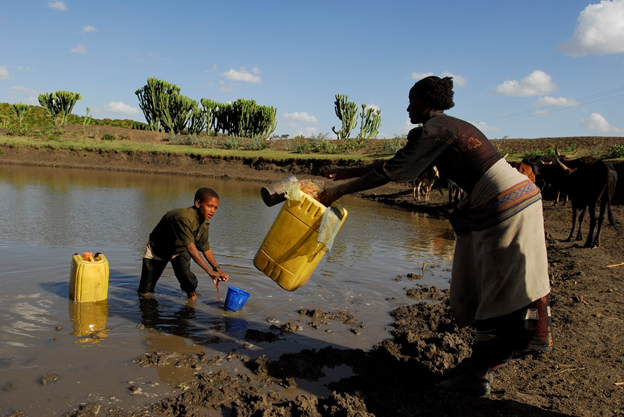
Clean water means more kids in school.
- 31% of schools lack access to safe water and adequate sanitation globally 1
- 1 in 4 girls do not complete primary school (compared to 1 in 7 boys) 2
- 15% increase in female enrollment when provided with clean water 3
- 443m days absent due to preventable water-related diseases each year 4
Access to clean water restores health for families and reduces the amount of time that children, who often help with chores at home, spend walking and waiting to collect water each day. Clean water gives kids a chance to attend school and build a better future.
Causes of the Water Shortage
Even with an adequate water supply, the majority of Ethiopians are already considered poor by world standards. Ethiopia has been referred to as the “water tower” of Africa. It has many major rivers including the longest river in the world, River Nile, and the greatest water reserves on the continent. The problem therefore is not one of supply, but of access. There has simply been a lack of development of irrigation systems, dams, and other projects to access the available water. Hand-dug wells are the norm but, in drought conditions, the wells must be dug deeper. And with continual droughts, the groundwater that fed these wells usually dries up completely.
Effects of Water Scarcity
Water development solutions have always been the starting point for our work in Ethiopian rural communities. Until there is access to clean water, other development projects aren’t possible.
How does having cleaned water at home impact school attendance?
Collecting dirty water takes time! When families have access to clean water close to home, kids can focus on more important things, like going to school, studying, and enjoying their childhood.
Why is it important to have safe water and adequate facilities at school?
Clean water stations give kids a place to wash their hands. Proper latrines provide privacy for young girls. These facilities ensure that kids, who become healthy, continue to stay healthy.
Why is education important for kids in rural communities?
Attending school gives kids a chance to expand their knowledge and pursue new opportunities. It provides a chance to become doctors, engineers, and social workers. It promotes stronger futures.